
UV Flame Sensors vs Flame Rod Sensors: Key Differences Explained
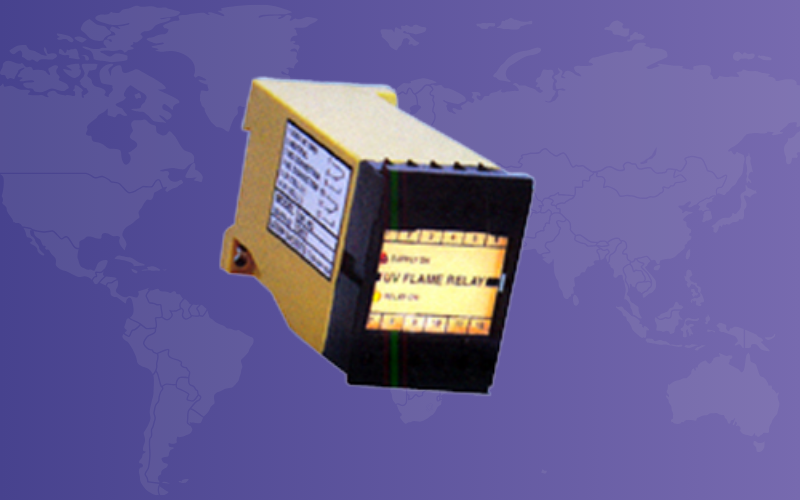
In modern industrial combustion systems, flame detection plays a critical role in ensuring safety, efficiency, and reliable burner operation. Boilers, furnaces, ovens, and thermal processing systems rely on accurate flame monitoring to confirm that fuel combustion is stable and controlled.
If a burner flame is not detected properly, it can lead to fuel accumulation, unsafe ignition, or even furnace explosions. That is why industries use specialized flame sensors integrated with burner control systems to continuously monitor combustion.
Two of the most commonly used technologies are UV Flame Sensors and Flame Rod Sensors. While both serve the same purpose—detecting the presence of a flame—their working principles, applications, and performance characteristics are quite different.
Understanding the differences between these two sensors helps engineers, OEMs, and plant operators select the right flame detection system for industrial burners.
What Is a Flame Sensor?
A flame sensor is a sfety device used in industrial burners and boilers to detect whether a flame is present during combustion. These sensors are connected to burner controllers or flame monitoring systems, which immediately shut off the fuel supply if the flame is lost.
Flame detection systems are essential for:
- Industrial boilers
- Gas and oil burners
- Furnaces
- Thermal oxidizers
- Incinerators
- Process heating equipment
The primary function of a flame sensor is to prevent unburned fuel from entering the combustion chamber, which could create hazardous conditions.
What Is a UV Flame Sensor?
A UV flame sensor (Ultraviolet Flame Detector) detects flames by sensing the ultraviolet radiation emitted by combustion.
During combustion, flames produce ultraviolet radiation in the wavelength range of 185–260 nanometers. UV sensors are designed to detect this radiation and confirm the presence of a flame.
Working Principle
UV flame sensors contain a UV-sensitive phototube or semiconductor device that detects ultraviolet radiation emitted by the flame. When UV radiation is present, the sensor generates an electrical signal that is interpreted by the burner controller as flame present.
If the flame disappears, UV radiation stops immediately, and the burner controller shuts down the fuel supply.
Key Features of UV Flame Sensors
- Fast response to flame presence and loss
- Highly reliable flame detection
- Suitable for gas and oil burners
- Works in high-temperature industrial environments
- Resistant to visible light interference
Applications of UV Flame Sensors
UV flame sensors are widely used in:
- Industrial boilers
- Oil and gas burners
- Petrochemical furnaces
- Power plants
- Waste incinerators
- Large industrial combustion systems
These sensors are particularly useful where quick flame detection and high safety standards are required.
What Is a Flame Rod Sensor?
A flame rod sensor, also known as a flame rectification sensor, detects flames based on the electrical conductivity of the flame.
Unlike UV sensors, flame rod sensors rely on the fact that a flame can conduct electricity due to the presence of ionized particles in the combustion zone.
Working Principle
Flame rod sensors operate on a principle called flame rectification
When a flame is present:
- An AC voltage is applied between the flame rod and burner ground.
- The flame acts as a conductor.
- The AC signal is rectified into a small DC current.
- The burner controller detects this current as proof of flame presence.
If the flame disappears, the current stops and the controller shuts off the burner.
Key Features of Flame Rod Sensors
- Simple and cost-effective design
- Reliable for gas burner applications
- Easy installation and maintenance
- Long operational life
Applications of Flame Rod Sensors
Flame rod sensors are commonly used in:
- Gas-fired boilers
- Industrial ovens
- Small to medium burners
- Heating systems
- Commercial combustion equipment
They are best suited for gas combustion systems where the flame directly contacts the sensor rod.
UV Flame Sensors vs Flame Rod Sensors: Key Differences
Detection Principle
UV flame sensors detect ultraviolet radiation emitted by flames, whereas flame rod sensors detect electrical conductivity through flame ionization.
Fuel Compatibility
UV sensors can detect flames from gas, oil, and dual-fuel burners, while flame rod sensors are primarily suitable for gas burners.
Response Time
UV flame sensors offer extremely fast flame detection, which is critical for large industrial burners. Flame rod sensors are reliable but slightly slower in response.
Installation
UV sensors monitor the flame through a sight port, while flame rod sensors must be inserted directly into the flame zone.
Maintenance
UV sensors require periodic cleaning of the viewing window, whereas flame rods may require cleaning of deposits on the rod surface.
When Should You Use a UV Flame Sensor?
UV flame sensors are ideal when:
- Burners operate on oil or dual fuels
- Large industrial boilers or furnaces are used
- Fast flame failure detection is required
- The sensor cannot be directly placed in the flame
Many power plants, petrochemical facilities, and large industrial boilers depend on UV flame detection systems.
When Should You Use a Flame Rod Sensor?
Flame rod sensors are suitable when:
- The burner uses natural gas
- The combustion system is small or medium sized
- The flame can directly contact the sensor rod
- A cost-effective flame monitoring solution is required
They are commonly used in gas burners, industrial ovens, and heating systems.
Where We Come In
At Linear Systems India, we specialize in designing and manufacturing reliable flame detection and burner control solutions for industrial combustion systems.
Our product range supports boiler manufacturers, furnace OEMs, burner system integrators, and industrial plants with advanced safety and monitoring technology.
Our solutions include:
- UV Flame Sensors for reliable flame detection in oil, gas, and dual-fuel burners
- Flame Rod Sensors designed for stable gas burner applications
- Flame Amplifiers for accurate signal processing
- Burner Sequence Controllers for safe burner startup and shutdown
- Ignition Transformers for reliable ignition systems
These products are designed to ensure:
- Accurate flame monitoring
- Reliable burner operation
- Improved industrial safety
- Compliance with combustion safety standards
With years of expertise in industrial burner control technology, we support OEMs and end users with dependable flame monitoring systems that enhance both safety and operational efficiency.
Conclusion
Both UV Flame Sensors and Flame Rod Sensors are essential components in industrial combustion safety systems. While UV sensors provide fast and highly reliable detection for large industrial burners, flame rod sensors offer a simple and effective solution for gas-fired combustion systems.
Selecting the right flame detection technology ensures stable burner operation, improved safety, and reduced operational risks.
By integrating advanced flame monitoring solutions from Linear Systems India, industries can ensure safe, efficient, and uninterrupted combustion processes in boilers, furnaces, and industrial heating systems.