
Burner Controllers
Our Products
Download & View Ecatalogue
Enquiry Now
BURNER CONTROLLERS
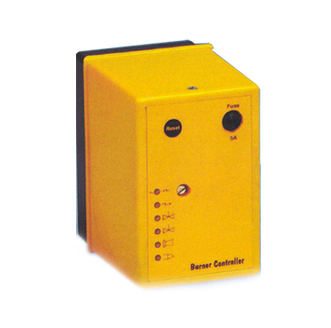
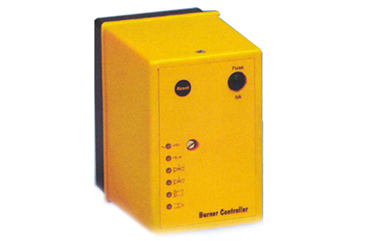
Burner Controllers play an essential role in ensuring the safe and efficient operation of gas burners by coordinating critical components such as ignition transformers, flame sensors, burner sequence controllers, and flame amplifiers. A gas burner is a device used to mix gaseous fuel with oxygen and supply this mixture to an outlet, where it gets ignited—typically using ignition transformers—to create a stable combustion front. Flame sensors and flame amplifiers continuously monitor flame presence and quality, while burner sequence controllers manage the precise startup, operation, and shutdown sequence. As gas usage increased over time—from street lighting to various industrial applications—advancements in burner design and integrated control systems evolved to ensure higher levels of precision, consistency, and operational safety.
- Low-Pressure Burners: The pressure of the gases that are applied to the low-pressure burners are up to 5-kilo Newtons per square meter (kN/m²) or 0.05 kilogram-force per square centimeter (kgf/cm²)
- Medium Pressure Burners: The pressure of the gases that are applied to the medium pressure burners are between 5 to 300-kilo Newtons per square meter (kN/m²) or 0.05 to 3.0 kilogram-force per square centimeter (kgf/cm²)
- High-Pressure Burners: The pressure of the gases that are applied to the low-pressure burners are more than 300-kilo Newtons per square meter (kN/m²) or 3.0 kilogram-force per square centimeter (kgf/cm²)
- The Mixer: The mixer is responsible for combining gaseous fuel with oxygen before sending the mixture toward the outlet.
- The Nozzle: The nozzle is the final outlet through which the mixed gas stream is ignited, forming a stable combustion flame.
- Ensure the burner ignites in the correct sequence
- Provide safety supervision during operation
- Support shutdown in case of flame failure
- Improve operational reliability and efficiency
- Help align burner operation with industrial safety requirements